


Rapid gearbox replacement on Vestas V126 turbines to restore availability
A gearbox failure at Mustilankangas risked several months of downtime. By accelerating sourcing and applying a structured exchange process, the turbine returned to operation significantly earlier than expected.
Background
Exilion Tuuli Ky operates one of Finland’s largest onshore wind portfolios.
At the Mustilankangas site, a Vestas V126 turbine was taken out of operation following a confirmed gearbox failure. Installed in 2015, the turbine was equipped with an early-generation gearbox design.
When a turbine of this type stops, the impact extends beyond the component itself. Production planning becomes less predictable, and long lead times on drivetrain components can quickly stretch downtime far beyond the physical repair window.
In this case, standard delivery routes indicated several months before a compatible gearbox could be sourced.
The challenge
The early gearbox design introduced constraints around both technical compatibility and supplier availability. Traditional supply channels pointed to a 5–6-month delivery window.
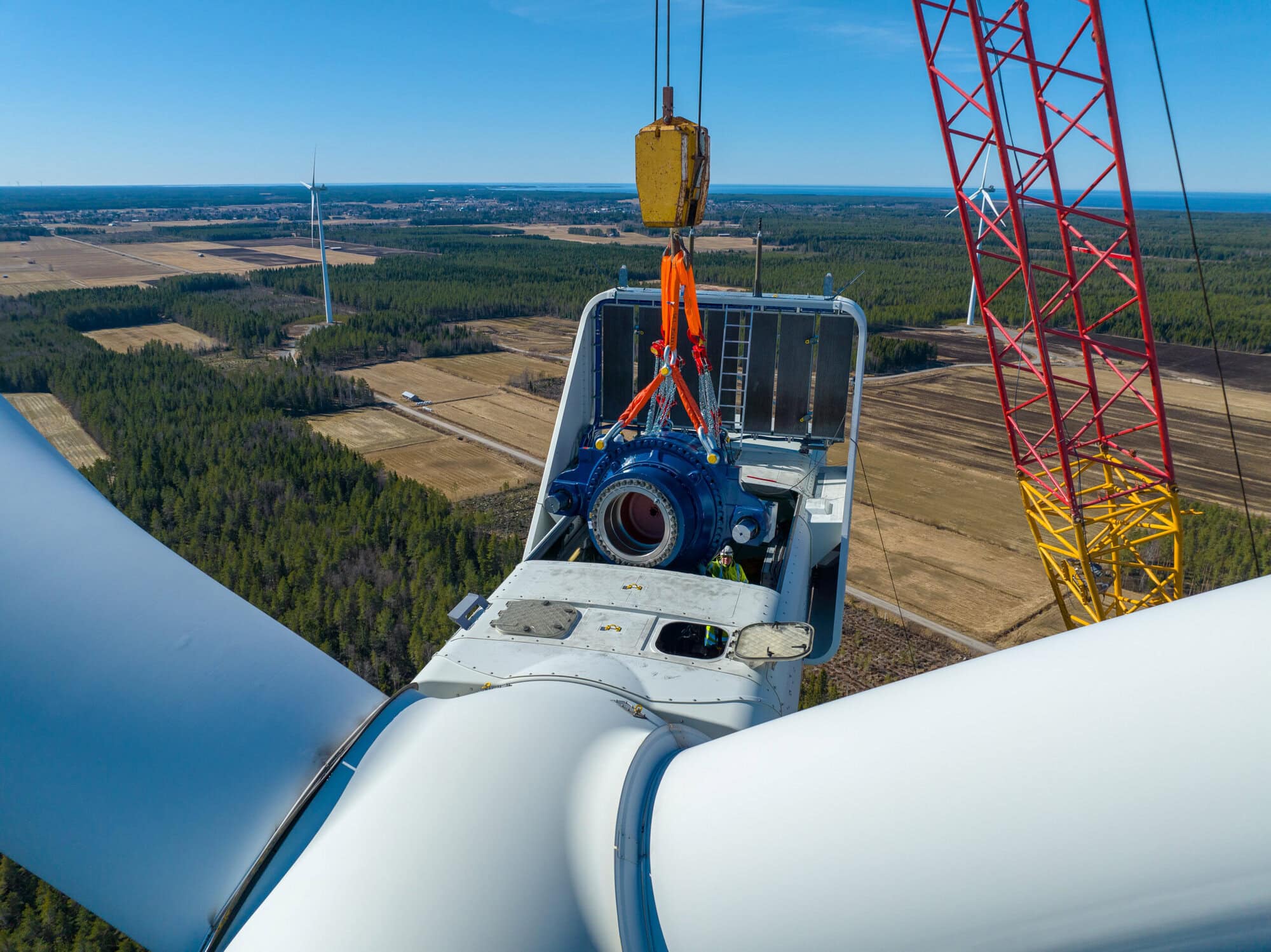
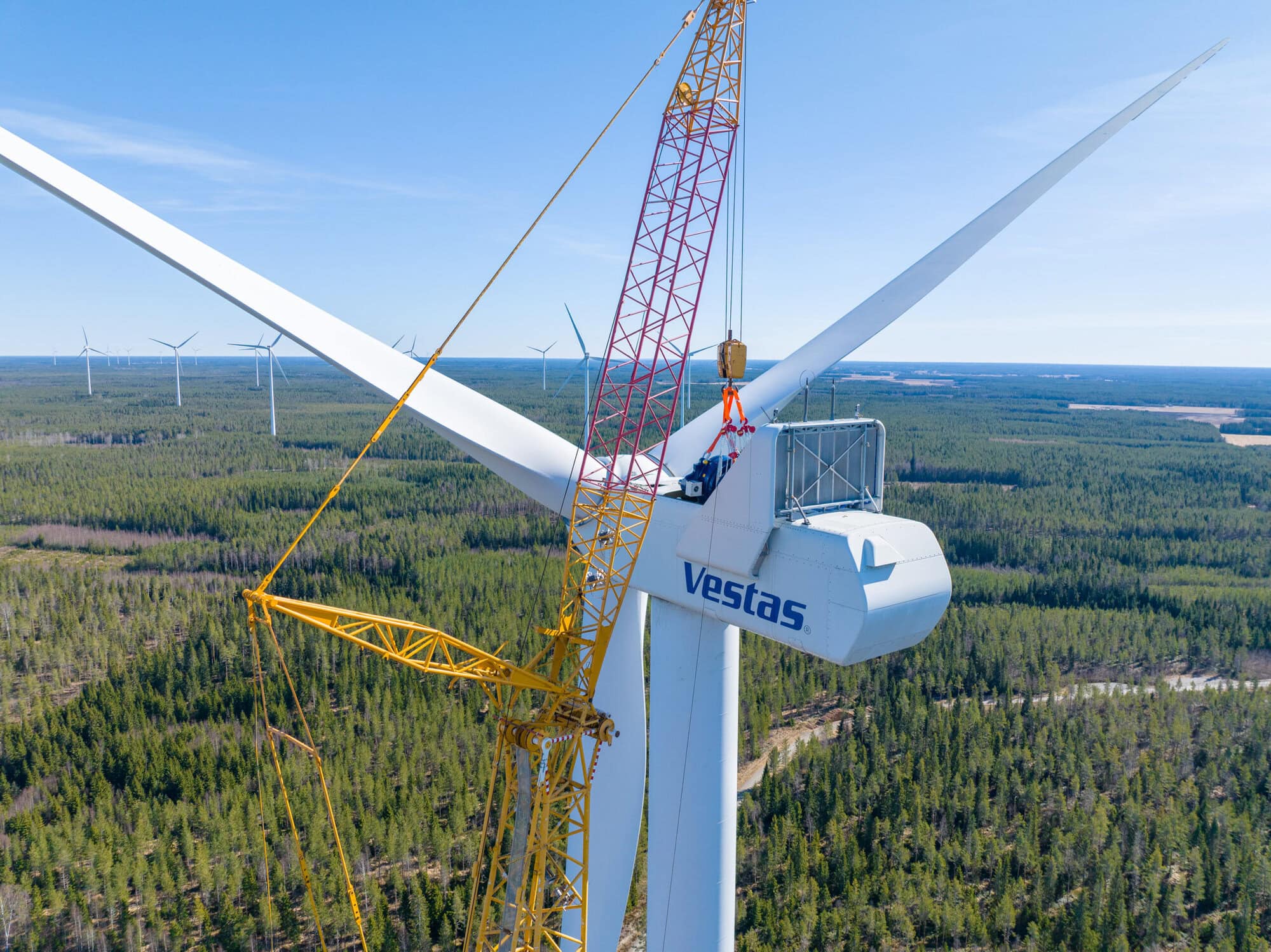
Crane availability added further complexity. Installation had to be carried out within narrow weather windows, with wind speeds below 9 m/s. That made timing critical.
Even minor mismatches in interfaces or missing components could have delayed the exchange further and pushed the timeline beyond the available crane window.
Initial assesment
An initial review focused on whether a newer gearbox version could replace the original design without introducing operational risk.
Mechanical interfaces, alignment tolerances and required spare parts were evaluated in detail.
A compatible solution was identified but required all interfaces to be prepared in advance. Several components came with extended individual lead times, requiring sourcing across multiple suppliers.
At that point, the success of the project depended less on the replacement itself and more on establishing a predictable, well-coordinated process.
Technical approach
Planning centred on reducing crane exposure and ensuring a controlled installation.
A latest-generation Winergy gearbox was secured through United Wind’s extended network. Required components—including couplings, studs, shims and interface parts—were sourced and consolidated across multiple suppliers to avoid dependency on a single delivery path.
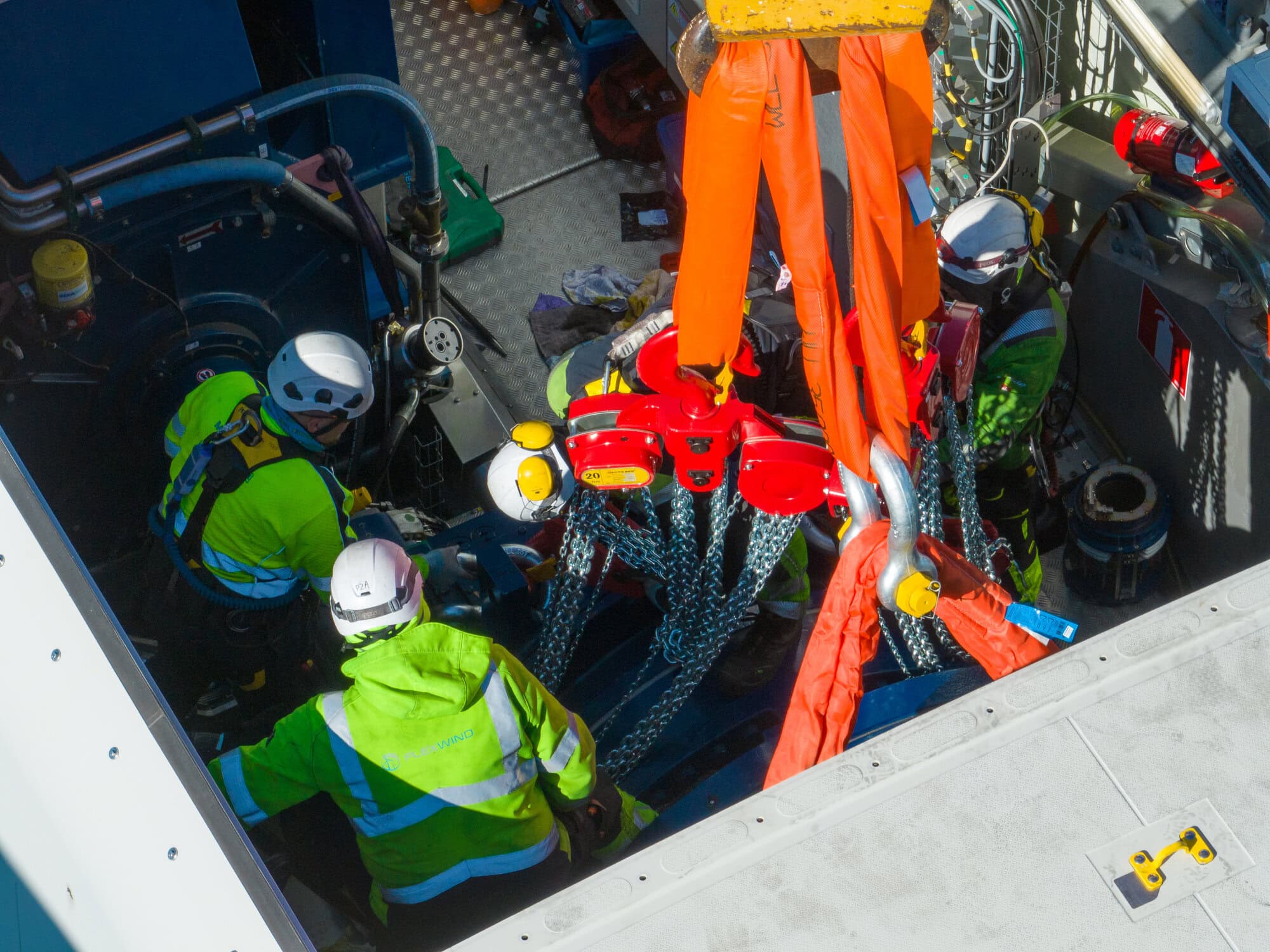
All interface checks were completed prior to lifting, following a structured approach commonly applied in drivetrain exchanges to avoid interruptions during crane operations.
Execution followed OEM-aligned procedures to maintain both safety and technical consistency.
Process overview
Work progressed through a defined sequence:
shutdown assessment, compatibility confirmation, accelerated sourcing, consolidation of mechanical interfaces, preparation of the crane window, and final on-site execution.
Each step was planned to ensure continuity and avoid last-minute adjustments.
Execution
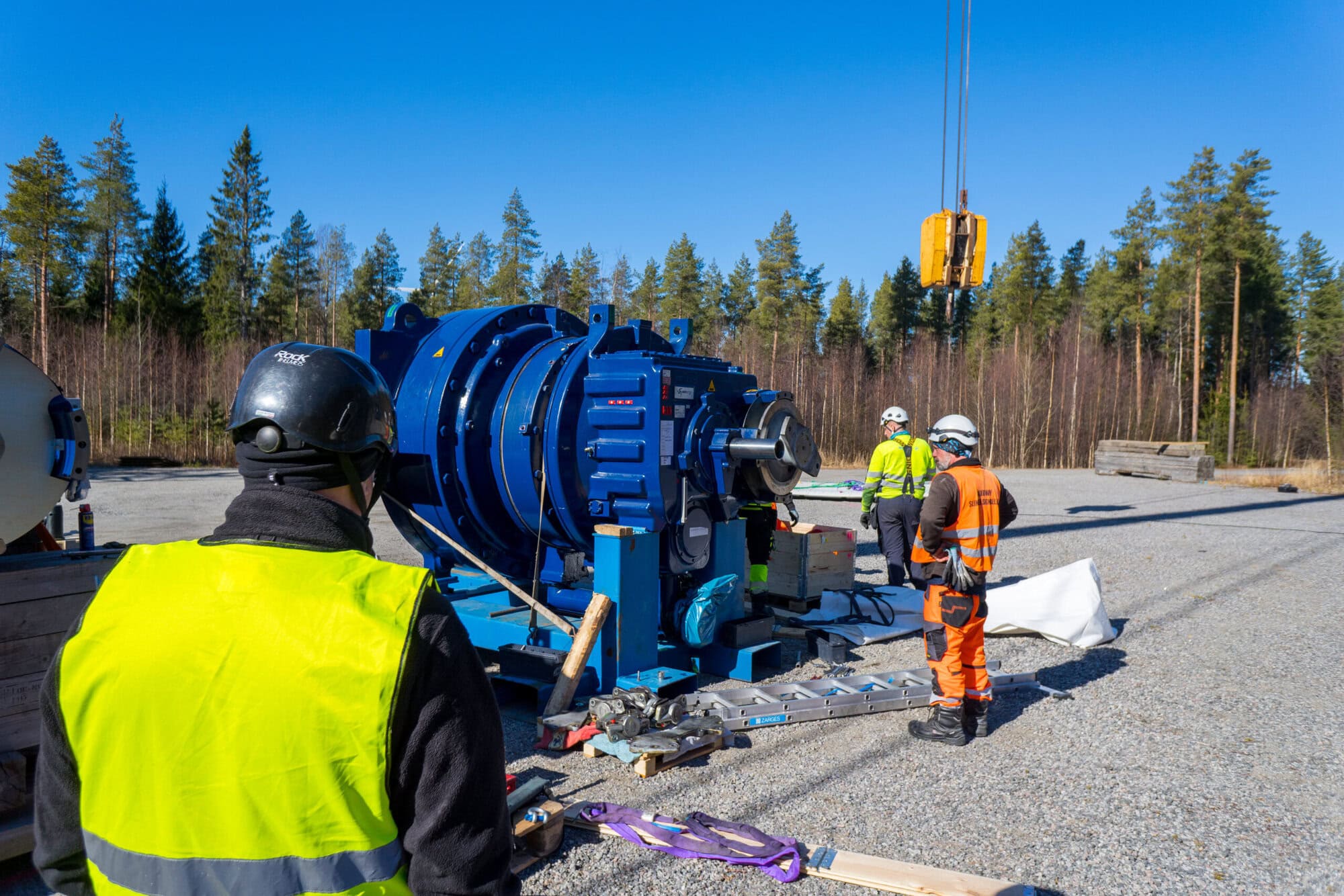
The gearbox was sourced and prepared for shipment within one month.
All components were validated together with the owner’s project manager to ensure completeness before mobilization.
Installation planning reflected both the gearbox version differences and the site’s wind-dependent constraints.
All parts arrived the day before installation. The lift and exchange were completed without interruption, and the turbine returned to operation shortly after commissioning.
Results
The turbine was brought back online several months earlier than standard delivery timelines would have allowed.
Shortening the lead time reduced the production impact and avoided prolonged drivetrain inactivity.
Continuous and transparent communication throughout the project supported a smooth process and positive outcome.
Returning the turbine to operation within the same operational window helped maintain stability across the site.
The case illustrates how coordinated sourcing and structured preparation can significantly reduce downtime on major drivetrain components.
Key takeaways
Lead times often define downtime more than the failure itself.
Early-generation components require careful compatibility planning.
Structured preparation enables complex replacements to be executed within narrow operational windows.
Closing
Behind the execution lies a consistent principle: preventing downtime starts long before the lift.
With model-specific insight, coordinated sourcing and a structured approach to decision-making, even complex drivetrain challenges can be handled with greater predictability.
At its core, the work is about one thing—reducing lost wind energy by acting early, acting precisely, and making the right technical decisions when it matters.